Energy-Based Devices – Safety & Complication Management
Burn Risks in Energy-Based Devices
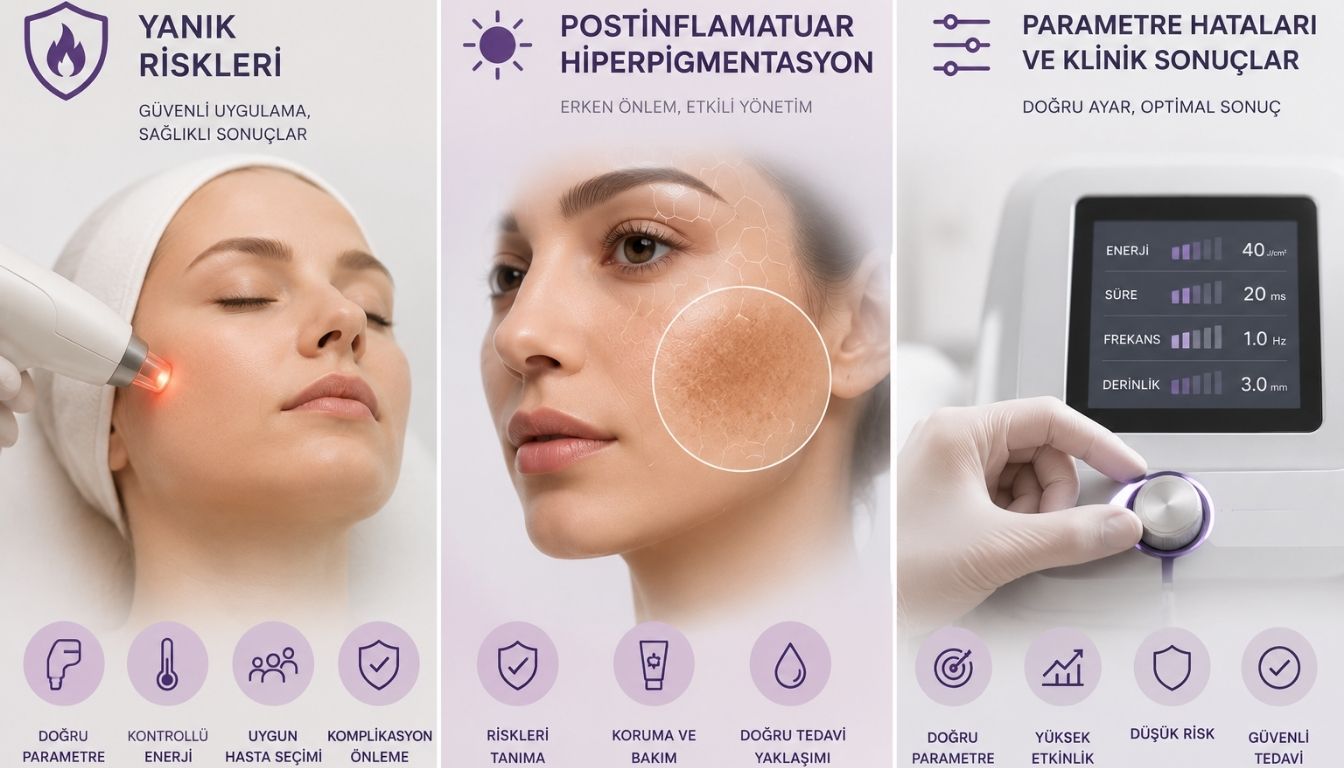
Although energy-based devices have a wide range of applications in medical aesthetics, they may carry a risk of thermal injury when incorrect parameters are selected or when applications are performed improperly. Laser, radiofrequency, ultrasound, and plasma energy systems aim to achieve tissue rejuvenation by creating controlled thermal effects. However, inadequate planning of this energy transfer may lead to burns at both the epidermal and dermal levels.
The primary factors determining burn risk in energy-based applications include energy density, application duration, skin type, and the targeted tissue depth. Particularly in individuals with higher Fitzpatrick skin types, increased epidermal melanin content may enhance energy absorption and elevate the risk of thermal injury. In addition, recently tanned skin, the use of photosensitizing medications, or active dermatological conditions should be carefully evaluated before treatment. Furthermore, it is critical for the physician to have detailed knowledge of the technical characteristics of the device being used, its energy delivery mechanism, and parameter limitations. Each device has a different tissue interaction profile, and a lack of device-specific knowledge may increase the risk of complications even in the correct indication.
Burn-related complications may present as erythema, blister formation, or epidermal damage. Early recognition and appropriate management of these conditions are essential in preventing permanent scarring or pigmentary alterations. Therefore, the use of energy-based devices requires not only device knowledge but also an understanding of skin biology and thermal tissue response.
During the training process, energy–tissue interaction, safe parameter ranges, and application strategies aimed at reducing burn risk are discussed in detail. Participants also learn the fundamental management approaches that can be applied when complications occur.
The aim is to develop the clinical awareness necessary to ensure safe treatment planning with energy-based devices and to recognize potential complications at an early stage.
Management of Post-Inflammatory Hyperpigmentation
Post-inflammatory hyperpigmentation (PIH) is one of the most common pigmentation-related complications that may develop following energy-based device applications. This condition generally occurs as a result of increased melanin production after epidermal inflammation or the transfer of pigment into the dermal layer. The risk is particularly higher in darker skin types and following aggressive energy-based treatments.
Multiple factors contribute to the development of PIH. Incorrect energy parameters, excessive energy density, inappropriate patient selection, and inadequate post-treatment care may all increase the likelihood of this complication. Therefore, factors such as skin type, history of pigmentation disorders, and sun exposure should be carefully evaluated during treatment planning.
When post-inflammatory hyperpigmentation develops, treatment is generally planned using pigment-suppressing topical agents, strict sun protection, and in some cases, the controlled use of supportive energy-based treatments. However, aggressive interventions may further worsen pigmentation.
During the training process, the pathophysiology of PIH, risk factors, and prevention strategies are discussed in detail. Participants also gain knowledge regarding parameter selection and treatment protocols aimed at reducing pigmentation risks during energy-based device applications.
The aim is to develop an approach that evaluates post-inflammatory hyperpigmentation not only as a complication that requires treatment, but also as a clinical condition that can be prevented through proper patient selection and safe treatment strategies.
Parameter Errors and Their Clinical Consequences
One of the most important factors determining treatment success in energy-based device applications is correct parameter selection. Parameters such as energy density, pulse duration, frequency, treatment depth, and number of passes directly determine the effect of the device on tissue. Incorrect planning of these parameters may both reduce treatment efficacy and increase the risk of complications.
Low energy settings often result in insufficient clinical effectiveness, while excessive energy application may cause complications such as epidermal injury, burns, pigmentary changes, or tissue sensitivity. Therefore, parameter selection should not rely solely on device protocols, but must also take into account the patient’s skin type, tissue thickness, and treatment indication.
Each energy-based device operates through different biophysical mechanisms. In laser systems, wavelength and pulse duration are critical factors; in radiofrequency systems, energy density and treatment duration play a major role; while in ultrasound systems, focal depth is among the key parameters determining treatment outcomes.
Within the training program, parameter planning for different energy systems, safe treatment ranges, and the evaluation of clinical outcomes are discussed in detail. Participants also analyze the clinical consequences of incorrect parameter selection and develop strategies to reduce complication risks.
The aim is to develop a safe approach to the use of energy-based devices that is based not only on device knowledge, but also on tissue biology, clinical indications, and proper parameter management.