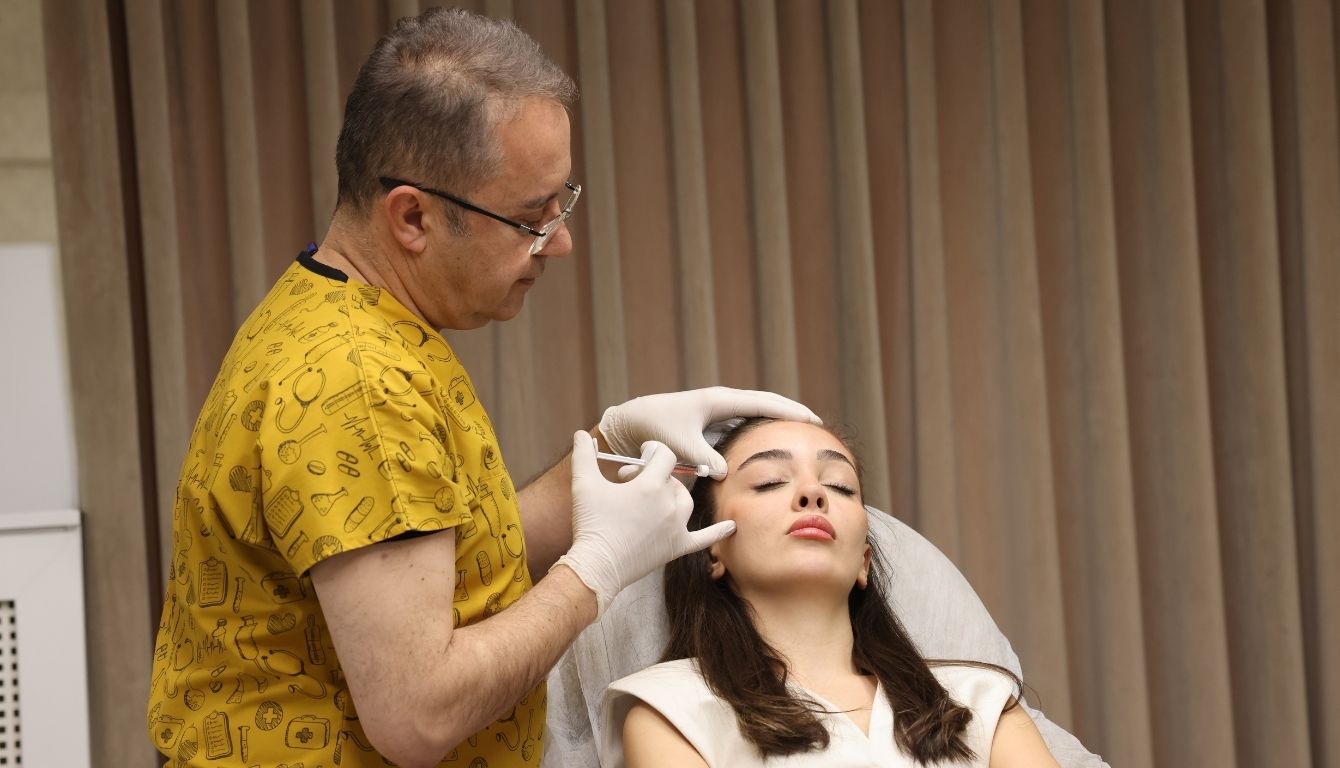
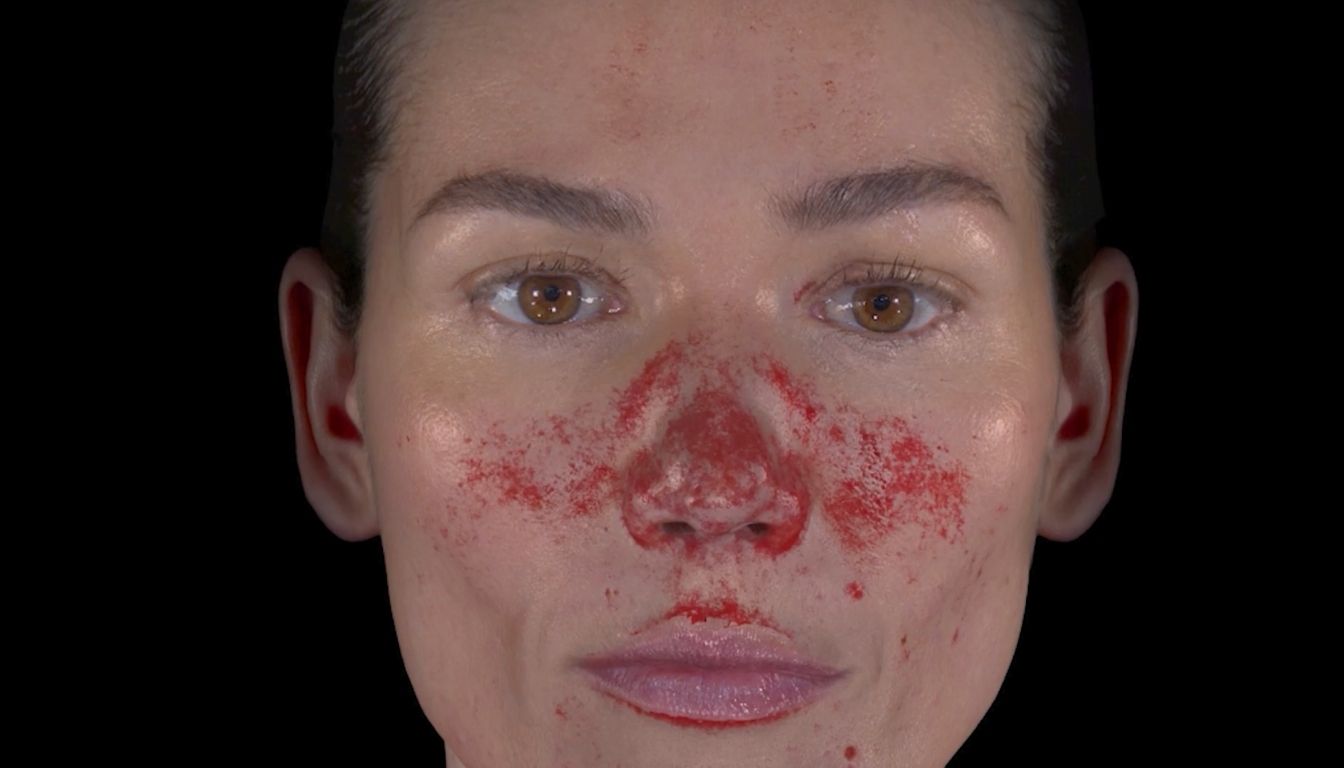
Temporal augmentation is an advanced filler procedure designed to address one of the earliest and most noticeable manifestations of facial aging: volume loss in the temporal region. Volume depletion in this area not only creates temporal hollowing but can also contribute to eyebrow descent, reduced lateral orbital support, and a fatigued appearance around the eyes. As temporal volume diminishes, the transition between the upper and midface weakens, significantly affecting overall facial contour and harmony.
The primary objective of temporal filler treatment is to restore volume without adding excessive heaviness to the face, enhance lateral brow support, and create a smoother transition between the upper and midface. When properly planned, temporal augmentation can provide a subtle lifting effect to the lateral eyebrow, resulting in a more open and refreshed appearance around the eyes. Furthermore, improved support of the midface can reduce gravitational stress on the lower face and jawline, indirectly contributing to a more defined perception of the jawline and lower facial contours.
Several technical approaches may be utilized in temporal filler treatments. Deep-plane injections commonly involve the supraperiosteal bolus technique, while retrograde linear threading may be preferred when a more homogeneous distribution of volume is required. In cannula-based treatments, product placement is often achieved using fanning or cross-hatching techniques. Needle-based injections can provide controlled projection at specific points, whereas cannula techniques may offer advantages in creating smoother transitions and distributing product across broader treatment areas. Regardless of the technique used, appropriate plane selection and respect for vascular anatomy remain fundamental principles.
Within the Temporal Filler Training program, participants gain detailed knowledge of the superficial and deep anatomy of the temporal region, safe injection strategies, technical variations, and product selection criteria. The course emphasizes that temporal augmentation should not be viewed as an isolated volumizing procedure but rather as an integral component of overall facial balance, influencing the eyebrows, periocular region, midface, and lower face. Concepts such as facial proportions, projection balance, and symmetry are presented from a practical clinical perspective.
The training program also analyzes common technical errors and discusses strategies for preventing them through case-based learning. The objective is to develop an advanced clinical approach that enables practitioners to achieve controlled, natural-looking results while preserving facial harmony and supporting overall facial aesthetics.