Dermal Filler Applications – Nasolabial Fold Augmentation
Nasolabial fold augmentation is one of the most commonly performed procedures in facial rejuvenation and addresses one of the most noticeable signs of aging. Located between the nasal ala and the corners of the mouth, the nasolabial folds occupy a central position on the face, making them one of the first areas where age-related changes become apparent. Deepening of these folds can create a tired, heavy, and downward-oriented facial expression. However, the treatment of the nasolabial region should not be viewed simply as a volume-replacement procedure focused solely on filling a line.
In most cases, prominent nasolabial folds are not the primary problem but rather a consequence of the aging process. Midface volume loss, diminished malar and zygomatic support, downward displacement of soft tissues, and reduced skin elasticity all contribute to their development. For this reason, directly filling the nasolabial fold is not always the most appropriate treatment strategy. Proper volume restoration in lateral facial regions such as the temporal, zygomatic, and malar areas can provide upward and outward support to facial tissues, indirectly reducing the appearance of the nasolabial folds. This approach often produces a more natural and balanced rejuvenation without adding unnecessary heaviness to the face.
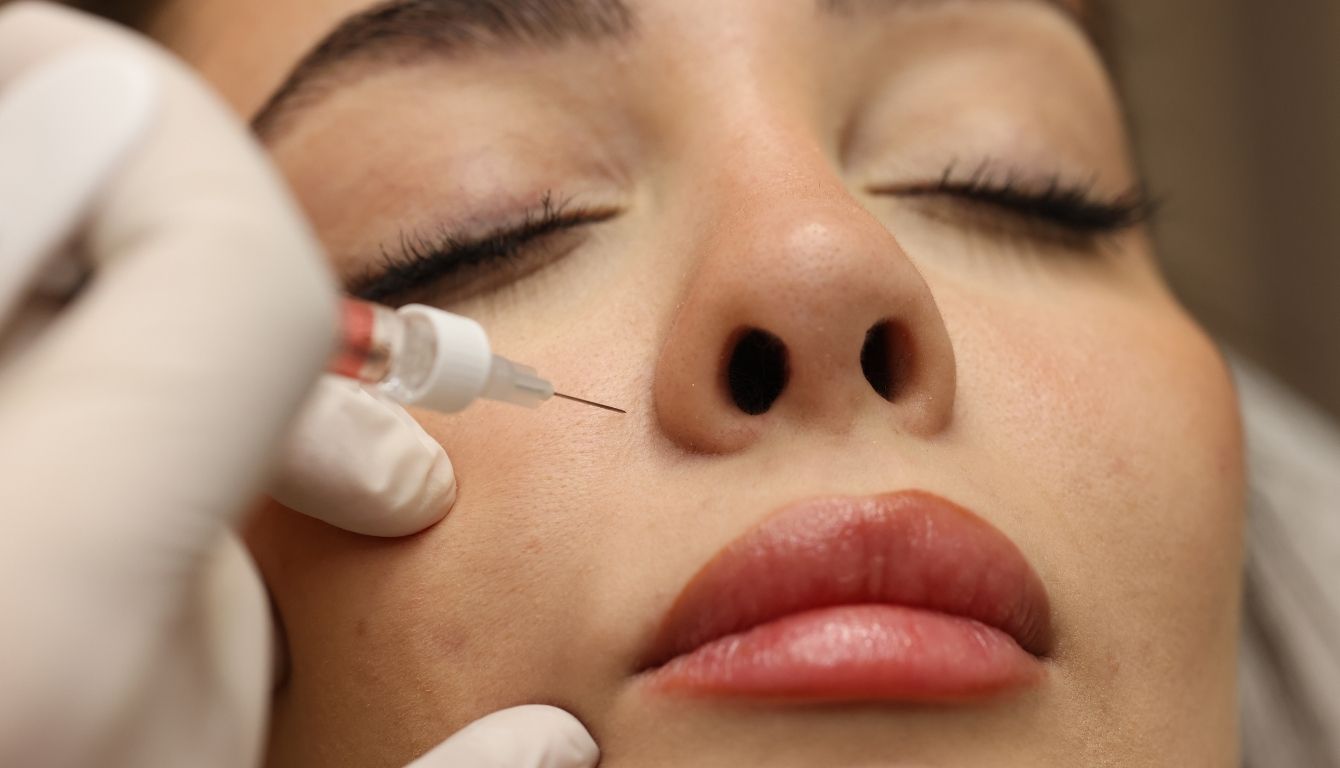
Both needle and cannula techniques can be utilized in nasolabial filler treatments, each offering distinct advantages depending on the patient’s anatomy and treatment goals. Needle-based injections allow for precise and localized correction in specific areas, while cannula techniques may facilitate more homogeneous product distribution and reduced tissue trauma. Regardless of the chosen method, appropriate plane selection, a thorough understanding of vascular anatomy, and avoidance of excessive volume remain essential principles.
Within the Nasolabial Filler Training program, participants gain detailed knowledge of regional anatomy, vascular relationships, safe injection planes, and both direct and indirect treatment approaches. The course teaches practitioners how to determine when direct treatment of the nasolabial fold is appropriate and when superior outcomes may be achieved through indirect support from lateral facial regions. In addition, common undesirable outcomes—including facial heaviness, loss of natural expression, and an overfilled appearance—are analyzed through clinical examples, along with strategies for prevention.
The training process emphasizes understanding the role of the nasolabial fold within the context of overall facial harmony. The objective is not to eliminate the fold entirely, but to create a softer, more balanced facial transition that preserves natural expression. When properly planned and executed, nasolabial filler treatment can provide noticeable yet refined aesthetic improvement without compromising facial authenticity.