
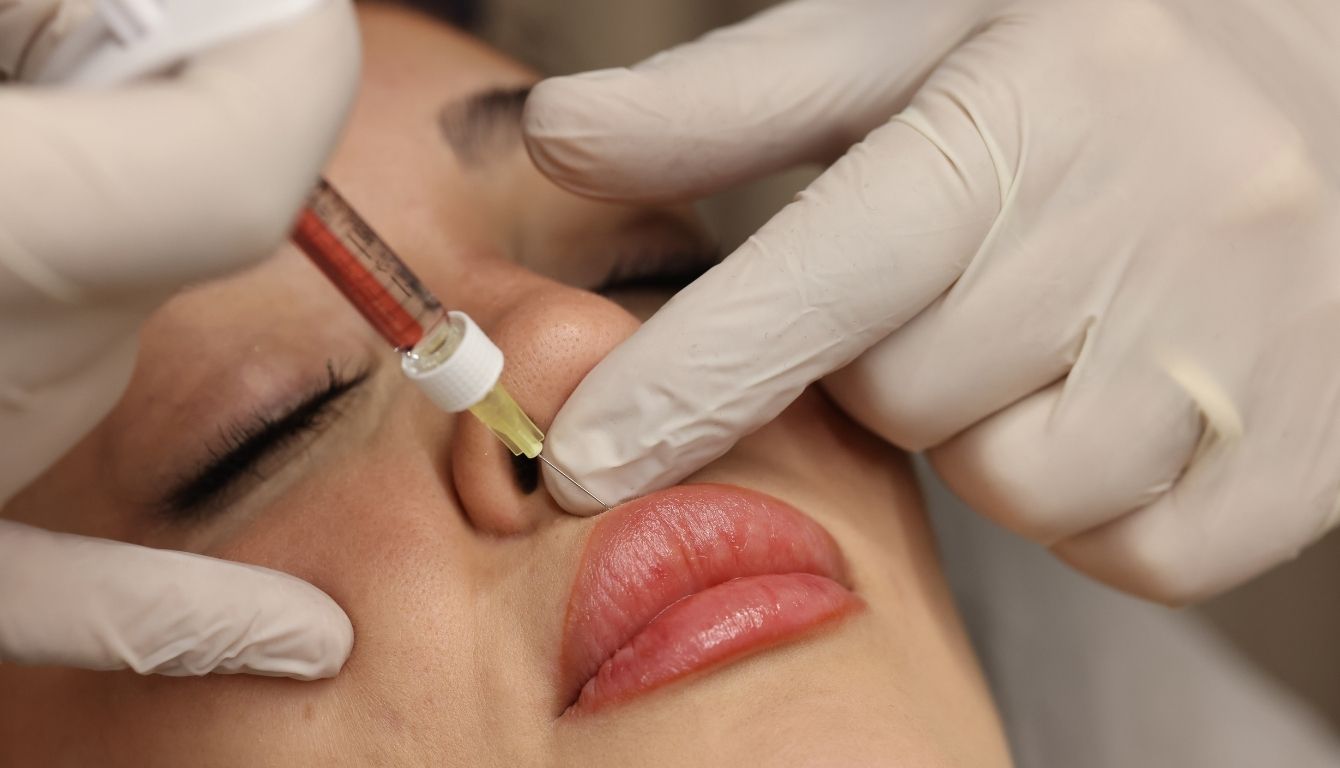
Dermal Filler Applications – Lip Augmentation
Lip augmentation is one of the most frequently requested aesthetic filler procedures, yet it is also one of the easiest to overcorrect. Because the lips play a central role in facial expression, speech, and overall facial aesthetics, any intervention in this area has a direct impact on the perception of the entire face. For this reason, lip filler treatments should be planned with an emphasis on shape, balance, and natural harmony rather than simply increasing volume.
The primary objective of lip augmentation is to enhance lip contours, improve proportions, and create volume that complements the overall facial structure. Every lip anatomy is unique, and a standardized approach rarely produces optimal results. Thin lips, poorly defined vermilion borders, significant asymmetries, previously overfilled lips, and lips that have lost structural support due to aging represent particularly challenging treatment groups. In clinical practice, lips often described as “seagull lips”—characterized by an overly pronounced Cupid’s bow and under-projected lateral segments—may develop an artificial and overly sharp appearance when poorly planned. Likewise, lips sometimes referred to as “deceptive lips,” which appear under-projected at rest but protrude rapidly with volume enhancement, require a controlled and gradual treatment approach. In such cases, the priority should be to establish support and structural definition before adding significant volume.
A variety of injection techniques may be utilized depending on lip anatomy and the desired aesthetic outcome. Linear threading, serial puncture, vermilion border enhancement, tenting techniques, and the Russian lip technique—used in selected projection-focused cases—should be chosen according to anatomical requirements and treatment objectives. Technique selection should never be driven solely by trends but should instead be based on sound anatomical principles. An inappropriate technique may result in firmness, asymmetry, or an unnatural appearance regardless of the amount of filler used.
The choice between needle and cannula techniques is also an important component of treatment planning. Needle-based injections offer greater precision for contouring and projection, while cannula techniques may provide advantages in broader volume distribution and reduced tissue trauma. Regardless of the method selected, careful attention to vascular anatomy and appropriate injection plane selection remains essential.
The Lip Filler Training program focuses not only on technical injection skills but also on the ability to accurately analyze different lip types and preserve natural anatomical boundaries. The objective is to develop a clinical perspective that enables practitioners to achieve results that blend seamlessly with the face, avoid an “overdone” appearance, and maintain long-term aesthetic harmony.